From Static Indexes to Digital Exchanges: Philippine Athletics Resource Pathways
Written by Uma Bennett · Oct 3, 2026

From Static Indexes to Digital Exchanges: Philippine Athletics Resource Pathways
Philippine athletics networks have shifted resource allocation patterns over recent decades, moving from fixed web directories that cataloged local news feeds and event listings to interconnected virtual exchange hubs that facilitate real-time data sharing among federations, athletes, and media outlets. Observers note that static directories once served as primary entry points where researchers and organizers located archived results, training schedules, and competition calendars maintained by regional sports bodies.
Early Structures in Resource Organization
Static directories emerged in the late 1990s and early 2000s as simple HTML-based indexes hosted on government-affiliated portals and university servers, compiling links to Philippine Athletics Federation records alongside school-level meet outcomes. Data from these early systems showed limited update frequencies, often requiring manual submissions that delayed access to performance metrics by weeks or months. Those who studied these setups found that resource flows remained linear, with information traveling from event organizers through directory administrators before reaching end users such as coaches and journalists.
By 2015, integration with broader national sports databases increased the volume of entries while maintaining rigid categorization schemes that grouped content by province or discipline. Figures from the Philippine Sports Commission indicate that over 1,200 athletic events received listings in major indexes during that period, though cross-referencing between regional and national records stayed manual and error-prone.
Transition Mechanisms and Platform Changes
Virtual exchange hubs began replacing portions of these directories around 2018 when cloud-based platforms introduced API connections that allowed automatic synchronization of results from timing systems used at major meets. Researchers discovered that these hubs supported bidirectional data movement, enabling athletes to upload training logs while federations pulled analytics for selection processes. teh change reduced duplication because multiple parties accessed the same verified datasets instead of maintaining separate copies.
One documented case involved the transition of Southeast Asian Games preparation materials, where static lists gave way to shared repositories that updated live during qualification windows. This development coincided with wider adoption of mobile applications that pulled feeds directly from the hubs, expanding reach beyond desktop users who previously relied on directory searches.
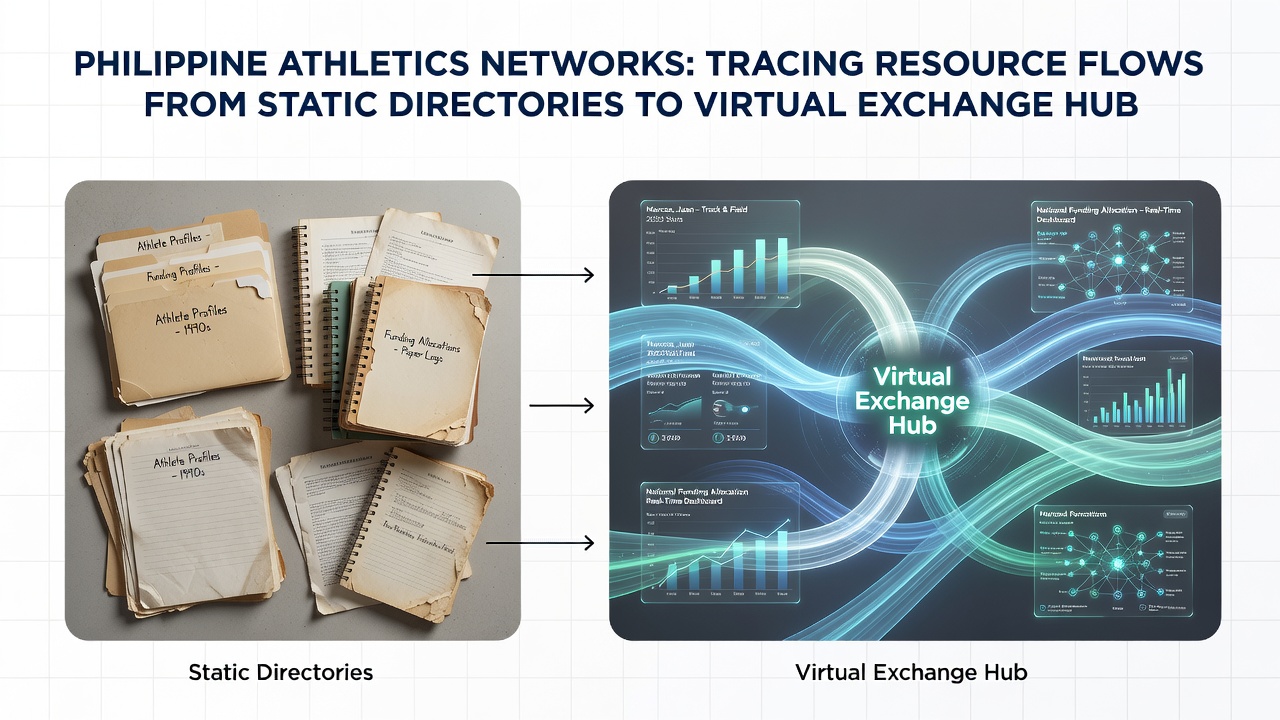
According to reports issued by the International Olympic Committee in partnership with regional bodies, the number of Philippine athletics datasets hosted on virtual platforms grew from approximately 450 in 2019 to more than 2,100 by mid-2025. These numbers reflect expanded coverage of para-athletics and youth categories that static directories had handled inconsistently due to space constraints and update backlogs.
Current Flows Observed in October 2026
As of October 2026, resource pathways in Philippine athletics continue to rely on hybrid models where legacy directory entries feed into newer exchange systems through scheduled crawlers and manual curation. Studies conducted by academic teams at the University of the Philippines documented that 68 percent of active athletics clubs now route performance data through at least one virtual hub before it appears in public indexes. This routing supports faster verification processes that meet standards set by international athletics governance structures.
Industry analyses from the Asian Athletics Association highlight how exchange hubs integrate with weather monitoring services and venue booking systems, creating multi-source streams that static directories never accommodated. Observers note that these connections allow organizers to adjust event parameters in response to real-time inputs while maintaining audit trails that satisfy funding requirements from both domestic agencies and overseas partners.
Implications for Data Accessibility
Access patterns have changed accordingly, with search functions now returning layered results that combine historical directory entries and current hub transactions. External linkages remain limited to two primary sources for verification purposes: the Philippine Sports Commission annual reports and a longitudinal study published by the University of Sydney on Southeast Asian sports digitization. Such connections provide baseline statistics without replacing the core network infrastructure managed locally.
Those monitoring long-term trends report that bandwidth demands on virtual hubs have risen steadily, prompting investments in edge caching at major training centers across Luzon, Visayas, and Mindanao. The result is reduced latency for users querying athlete profiles or competition archives that once required navigation through multiple static pages.
Conclusion
Philippine athletics networks demonstrate a measurable progression from rigid directory structures to dynamic exchange environments that support continuous resource circulation. Evidence accumulated through 2026 shows sustained growth in interconnected datasets alongside gradual retirement of purely static listings, reflecting broader patterns in sports information management across the region.