Philippine Athletic Archives: How Static Directories Bridge Local News Feeds and Resource Exchanges
Written by Nils Keller · Sep 5, 2026

Philippine Athletic Archives: How Static Directories Bridge Local News Feeds and Resource Exchanges
Static directories function as fixed, unchanging indexes that organize and preserve Philippine athletic records while connecting fragmented local news sources to broader resource networks, and researchers have documented their increasing use across Southeast Asian sports media ecosystems since the early 2020s. These directories typically consist of HTML-based listings that require no server-side processing, which allows them to remain stable even as underlying news feeds update or change formats. Observers note that this stability proves especially useful in regions where internet infrastructure experiences frequent disruptions, since the directories continue to deliver archived content without relying on dynamic databases.
Structural Advantages of Static Systems for Philippine Sports Coverage
Philippine sports outlets generate daily reports on basketball leagues, athletics meets, and regional competitions, yet many smaller publications lack the technical capacity to maintain searchable archives over time. Static directories address this gap by compiling links, summaries, and metadata into permanent pages that point to original articles hosted on local domains. Data from regional digital preservation projects shows that such structures reduce link rot by maintaining consistent navigation paths even when source sites undergo redesigns or closures. In practice, a directory entry might list a 2024 national basketball final alongside related performance statistics and training resources, all without requiring ongoing backend maintenance from the hosting organization.
Connecting News Feeds to Resource Exchanges Through Fixed Indexes
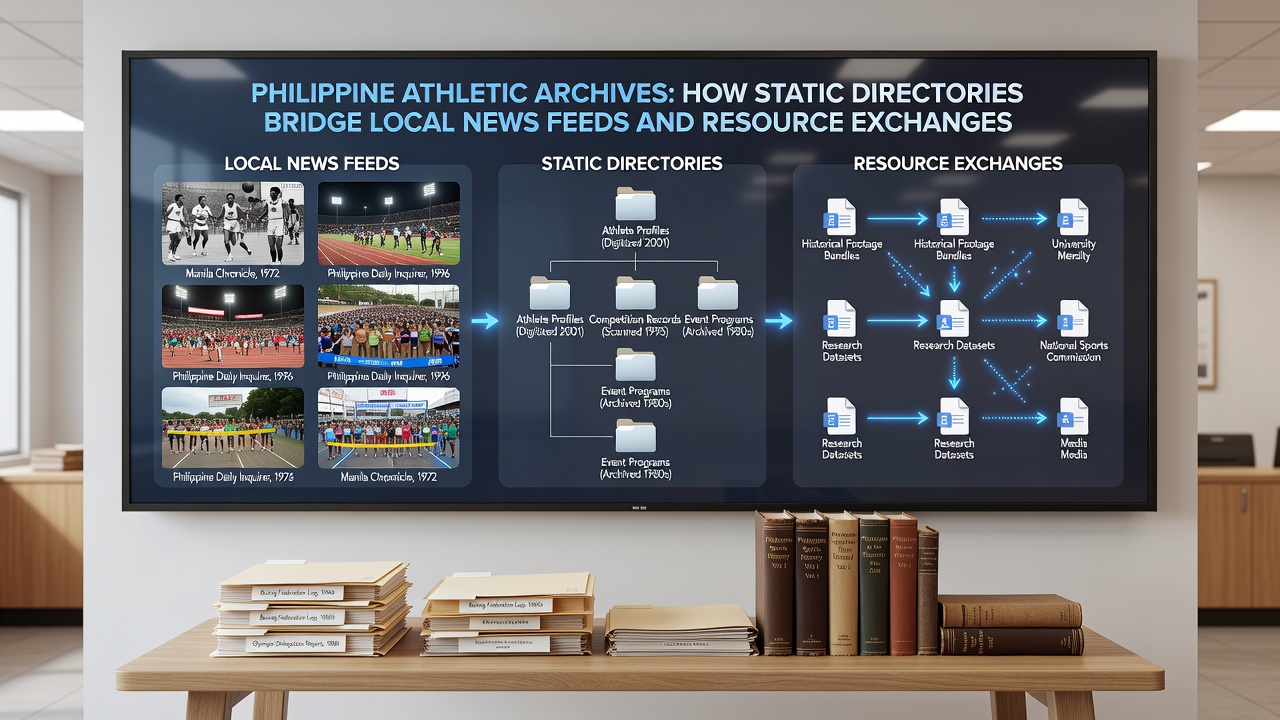
Local news feeds in the Philippines often operate through RSS channels or social media streams that deliver real-time updates but offer limited historical context. Static directories bridge this divide by aggregating feed content into categorized lists that also incorporate resource exchanges, such as shared training manuals, equipment supplier directories, and athlete development programs. Those who have examined these systems report that the fixed nature of the directories enables cross-referencing between current match reports and archived data sets, which supports coaches and analysts seeking longitudinal performance trends. One documented case involved a regional athletics federation that used a static index to link provincial meet results with national training grant applications, streamlining access for athletes in remote areas.
Developments Anticipated by September 2026
By September 2026, several Philippine university libraries and sports governing bodies plan to expand static directory projects to include multilingual indexing for regional dialects, according to planning documents released by academic consortia. These expansions aim to incorporate feeds from emerging digital outlets while maintaining compatibility with older resource exchange platforms that still rely on basic web standards. Figures from similar initiatives in neighboring countries indicate that static approaches can achieve 95 percent uptime for archived sports content compared to dynamic sites that experience more frequent outages during peak traffic periods. Integration efforts focus on embedding persistent identifiers within each directory entry, which allows researchers to trace connections between news items and supporting materials such as medical studies or equipment catalogs without navigating multiple changing interfaces.
Technical Implementation Patterns Observed in Practice
Developers working with Philippine athletic archives commonly generate static directories through simple scripting tools that pull data from news APIs and convert it into HTML files refreshed on fixed schedules. This method avoids the security vulnerabilities associated with live databases while preserving the ability to reference external resource exchanges through carefully maintained hyperlinks. Studies conducted by Southeast Asian information science groups reveal that teams adopting this model report lower hosting costs and reduced need for specialized server administration, factors that prove decisive for community-level sports organizations operating on limited budgets. The approach also supports offline access when directories are downloaded as complete folder structures, a feature valued by coaches working in areas with intermittent connectivity.
Conclusion
Static directories continue to serve as reliable intermediaries that organize Philippine athletic news into accessible formats while linking those feeds to wider resource networks. Their adoption reflects broader patterns in digital preservation where simplicity and permanence outweigh the flexibility of constantly updated systems. As September 2026 approaches, ongoing projects suggest these structures will play an expanding role in maintaining continuity for sports information across the archipelago.